



Agriculture is increasingly becoming a technology-driven industry, with artificial intelligence, robotics, sensors and advanced biological solutions helping farmers manage production more efficiently. The latest developments in agricultural technology demonstrate that the next farming revolution may be built around intelligent systems operating directly in fields, greenhouses and farms.
One of the recent developments comes from Belgium-based Biobest, which introduced its autonomous Polly robot for tomato pollination in greenhouses. The technology is designed to automate pollination tasks, an important part of commercial tomato production.
Greenhouse agriculture requires carefully controlled conditions, including temperature, humidity, irrigation, pollination and pest management. Automating some of these activities can reduce dependence on manual labour while supporting consistency in production.
Another breakthrough reported on November 19 involves a gene-switch technology that enables barley to be double-cropped without yield loss under tested conditions. The development could create opportunities for increasing agricultural productivity by allowing more efficient use of growing seasons.
Researchers and technology developers are also exploring gene editing in vegetables. In the United Kingdom, Phytoform reportedly received regulatory clearance for two gene-edited tomato traits, illustrating how biotechnology is increasingly intersecting with crop development.
These technologies represent different approaches to solving agricultural challenges. Robotics can automate physical work, artificial intelligence can analyse data and identify patterns, while genetics can improve crop characteristics and production performance.
India is also witnessing increased investment in agritech. ScaNxt Scientific Technologies, incubated at IIT Kanpur, recently secured investment from Rainmatter, SIDBI and Exim Bank to expand its platform for soil health, AI-powered pest detection and climate-resilient farming solutions.
The investment is expected to support research and development, product deployment and the expansion of distribution networks serving farmers.
The opportunity for agritech is significant. Farmers face rising input costs, unpredictable weather, water constraints, pest outbreaks and pressure to improve productivity. Technologies that provide timely information and targeted interventions can help reduce uncertainty and improve decision-making.
However, technology adoption is not automatic. Equipment must be affordable, dependable and suitable for local farming conditions. Farmers also need training, maintenance support, financing and access to reliable digital connectivity.
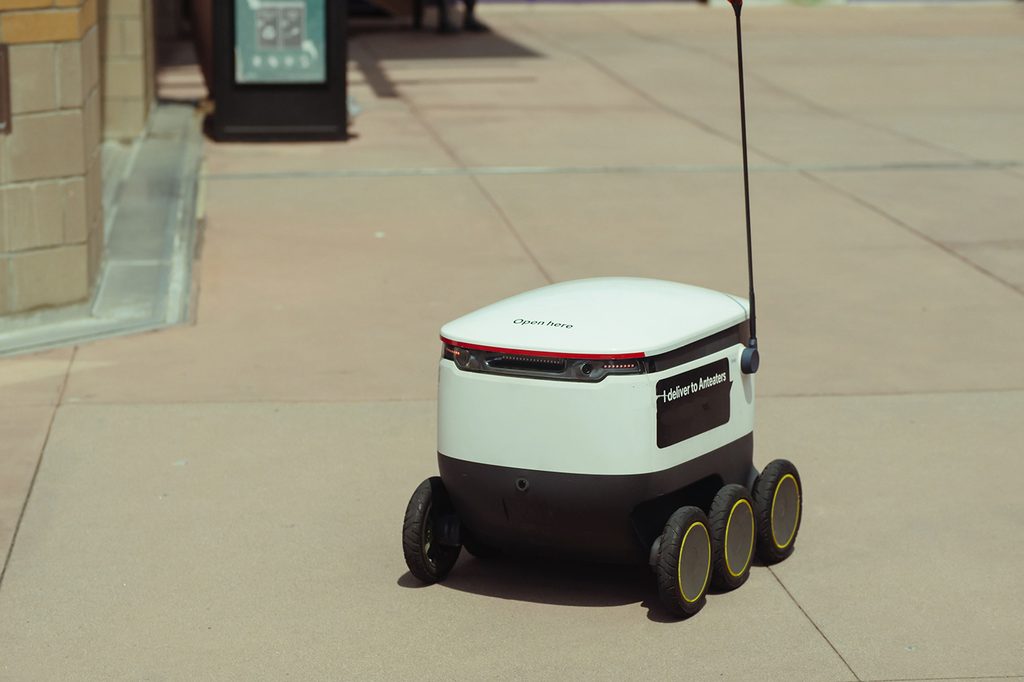
A robot designed for a large commercial greenhouse may not be suitable for a smallholder farm without adaptation. Likewise, AI models trained on one region’s crops or weather patterns may not perform accurately elsewhere.
The future of agritech will therefore depend not only on innovation, but also on accessibility and practical implementation.
Agriculture is evolving from a sector that relies mainly on experience and physical labour into one that can increasingly combine human knowledge with real-time data, intelligent machines and scientific advances.
The goal is not to replace farmers. It is to give them better tools to make decisions, manage resources and produce food in a world where environmental and economic pressures continue to grow.