







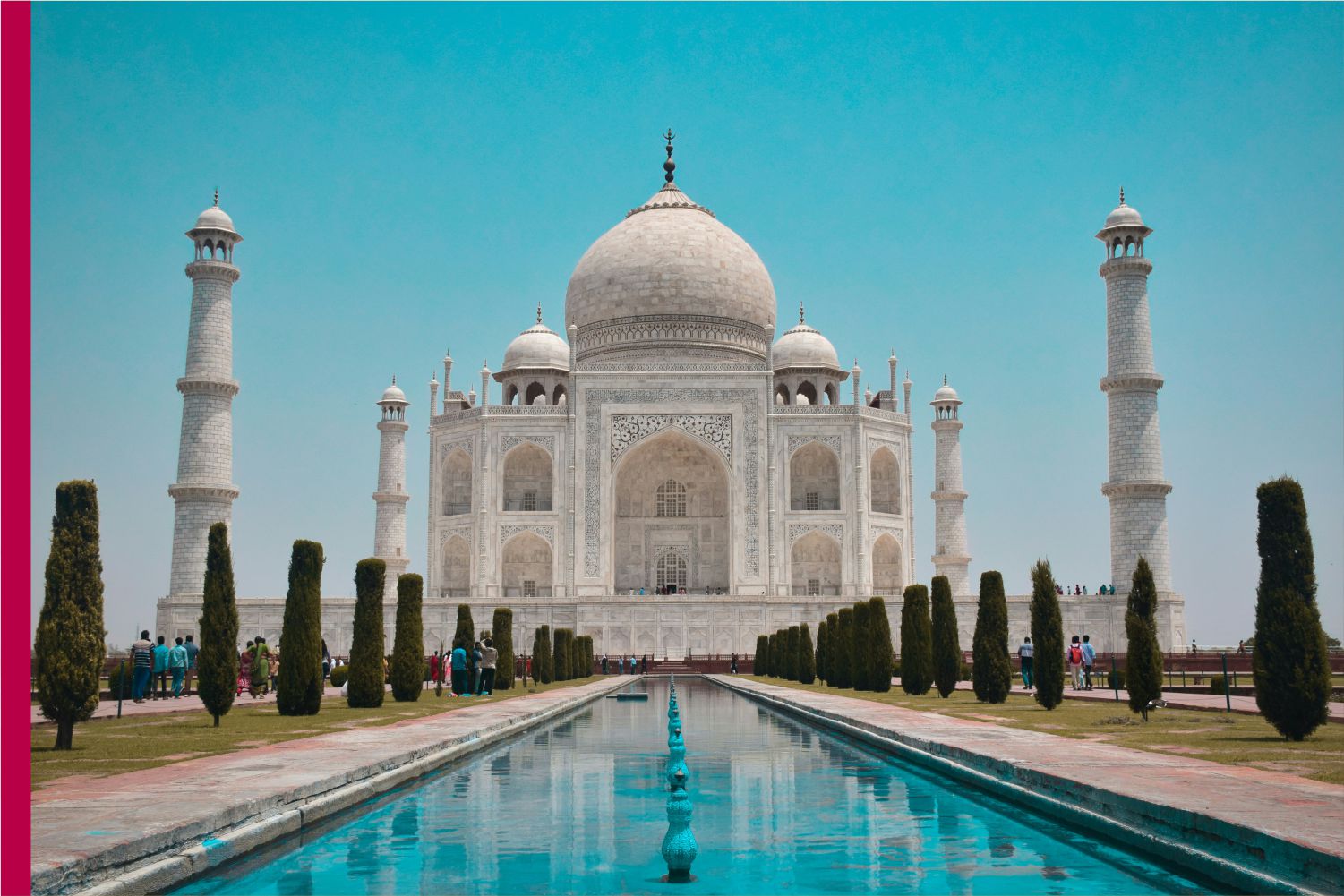
The Taj Mahal stands as one of the most iconic monuments in the world, admired not only for its breathtaking beauty but also for the deep emotion embedded in its creation. Located on the banks of the Yamuna River in Agra, India, this magnificent structure is more than just marble and stone—it is a timeless symbol of love, loss, and artistic mastery. Built in the 17th century by Mughal Emperor Shah Jahan in memory of his beloved wife Mumtaz Mahal, the Taj Mahal remains one of the finest examples of Mughal architecture, blending Persian, Indian, and Islamic styles seamlessly.
What makes the Taj Mahal extraordinary is not just its architectural brilliance but the story behind its construction. After Mumtaz Mahal’s death, Shah Jahan was grief-stricken and wanted to create a monument unlike any other a structure that would immortalize his love for her. The result was a mausoleum of unmatched beauty, created by thousands of artisans, craftsmen, and architects from across the world. Its construction took about 22 years, involving intricate craftsmanship and incredible precision that still amazes architects today.
The Taj Mahal’s design is a harmonious combination of symmetry, geometry, and artistic detailing. The central dome, standing at around 73 meters, is its most recognizable feature, appearing almost weightless as it rises above the main structure. Four elegant minarets stand at each corner, slightly tilted outward to protect the central building in case of collapse—an ingenious engineering detail. The white marble used in the monument reflects different hues depending on the time of day: soft pink in the morning, shining white at noon, and golden under the moonlight. This shifting beauty makes every visit feel unique.
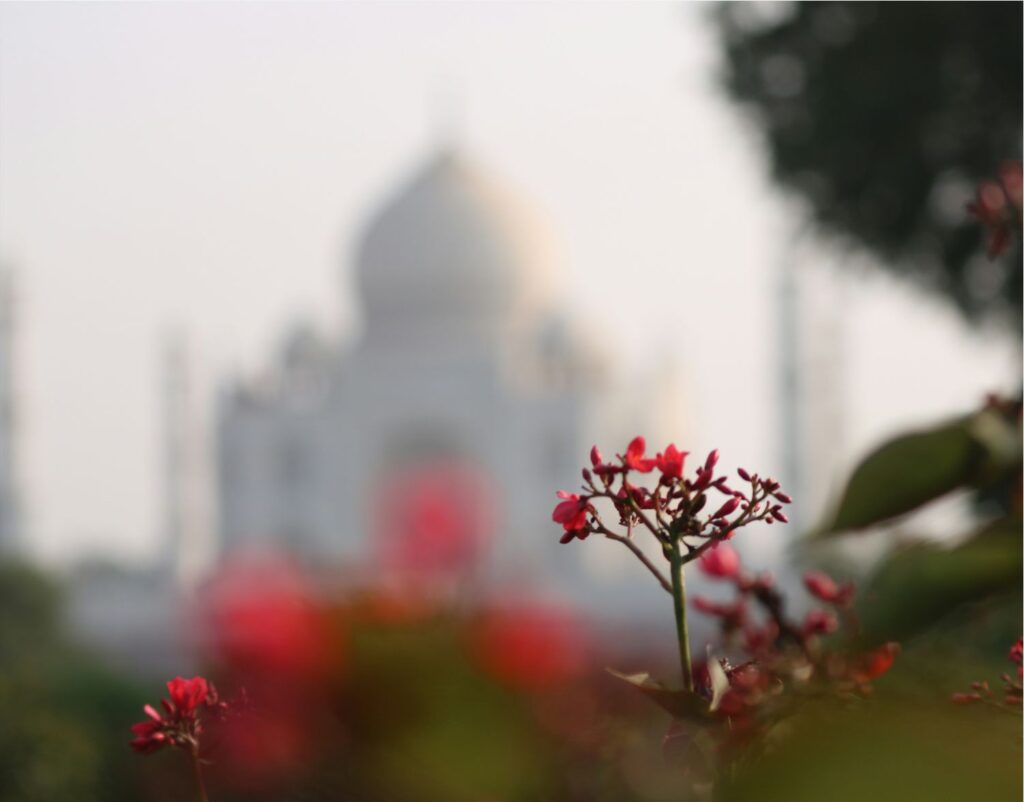
While the exterior of the Taj Mahal is mesmerizing, the interior is equally impressive. The cenotaphs of Shah Jahan and Mumtaz Mahal lie at the heart of the structure, intricately decorated with calligraphy, gemstones, and floral motifs. The real graves, however, are located beneath the main chamber, following Mughal burial traditions. The delicate craftsmanship inside includes pietra dura—an art form where semi-precious stones are inlaid into marble to create detailed floral patterns. Every corner of the monument reflects careful attention to detail and artistic devotion.
The Taj Mahal is surrounded by lush gardens designed in the Charbagh style, symbolizing the Islamic concept of paradise. These gardens, with their reflecting pools, pathways, and fountains, create a serene atmosphere that enhances the monument’s grandeur. The long reflecting pool that leads to the Taj Mahal is one of its most photographed features, perfectly mirroring the iconic structure.
Today, the Taj Mahal is not only a UNESCO World Heritage Site but also a global symbol of India’s rich cultural heritage. It attracts millions of visitors each year, leaving a lasting impression on anyone who witnesses its elegance. Despite being centuries old, the monument continues to inspire poets, artists, and travelers from around the world. The Taj Mahal stands as a reminder that love, art, and human creativity can transcend time. Its beauty and story continue to echo through generations, making it one of the most cherished wonders of the world.