




The latest technology in monitors is transforming the way people work, play, and consume content. Modern monitors are no longer just display screens; they have become powerful tools designed to enhance visual quality, comfort, and performance. With rapid advancements in display panels, refresh rates, connectivity, and smart features, monitors today cater to gamers, professionals, and everyday users alike.
One of the biggest advancements in monitor technology is display panel innovation. OLED and QD-OLED monitors are gaining popularity due to their ability to deliver perfect blacks, high contrast ratios, and vibrant colors. Unlike traditional LCD panels, OLED pixels emit their own light, resulting in better color accuracy and faster response times. Mini-LED technology is another major breakthrough, offering improved brightness, deeper contrast, and better HDR performance by using thousands of tiny LEDs for backlighting.
Resolution has also taken a major leap forward. While Full HD was once the standard, 4K monitors are now widely used for both productivity and entertainment. Beyond 4K, 5K and even 6K monitors are emerging, especially for designers, video editors, and content creators who require extreme clarity and large screen space. Higher resolutions provide sharper text, more detailed visuals, and improved multitasking without compromising image quality.
Refresh rates and response times have become a key focus, particularly for gaming monitors. Displays offering 144Hz, 240Hz, and even higher refresh rates are now common, delivering ultra-smooth motion and reduced screen tearing. Combined with adaptive sync technologies, such as variable refresh rate support, modern monitors provide a seamless and responsive experience. Faster response times also minimize motion blur, making them ideal for competitive gaming and fast-paced visuals.
Connectivity is another area where monitor technology has advanced significantly. USB-C and Thunderbolt support allow monitors to act as central hubs, enabling power delivery, data transfer, and display output through a single cable. This is especially useful for laptop users who want a clean and efficient workspace. Newer display standards support higher bandwidth, making it possible to run high-resolution displays at high refresh rates without quality loss.
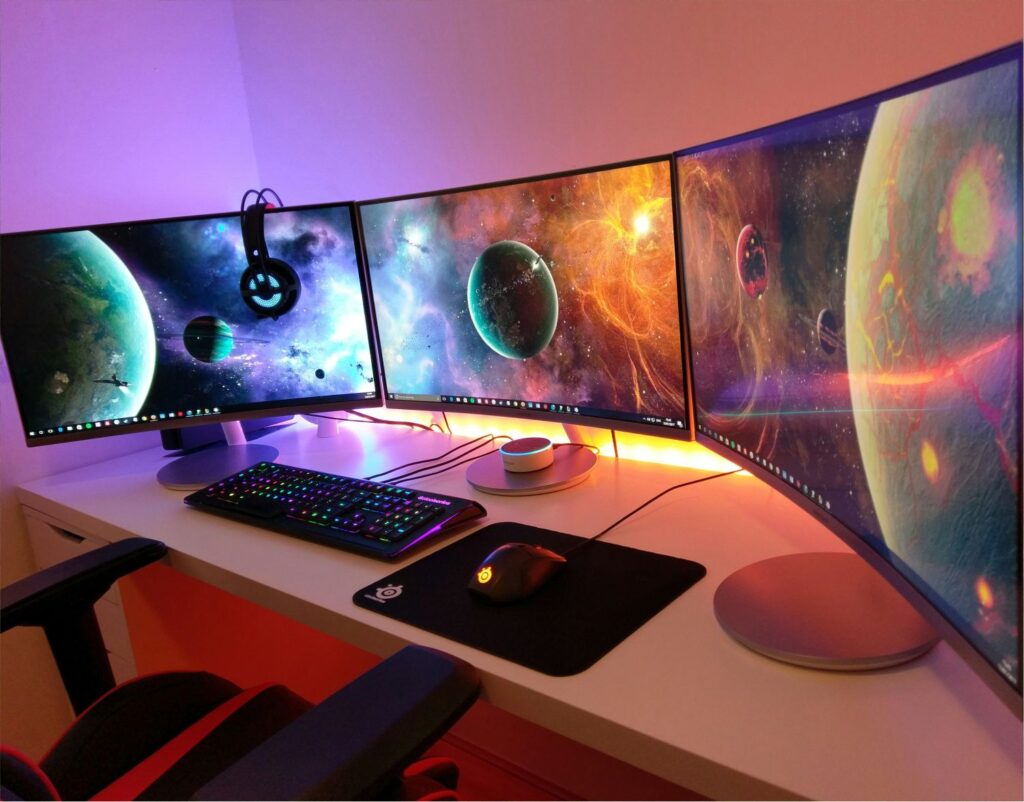
Eye-care and ergonomic features are becoming increasingly important in modern monitors. Technologies that reduce blue light emission and screen flicker help minimize eye strain during long usage hours. Adjustable stands, curved displays, and ultra-wide screens improve comfort and productivity by offering better viewing angles and immersive experiences. Curved and ultra-wide monitors are particularly popular for multitasking and cinematic viewing.
Smart features powered by software and artificial intelligence are also shaping the future of monitors. Some displays can automatically adjust brightness, contrast, and color profiles based on content or ambient lighting conditions. This intelligent optimization enhances both visual quality and energy efficiency, making monitors more adaptive to user needs.
In conclusion, the latest monitor technology focuses on delivering superior visuals, smoother performance, and enhanced user comfort. With advancements in panel types, resolution, refresh rates, connectivity, and smart features, monitors have evolved into essential tools that support modern digital lifestyles. As technology continues to progress, monitors will become even more immersive, intelligent, and versatile.