








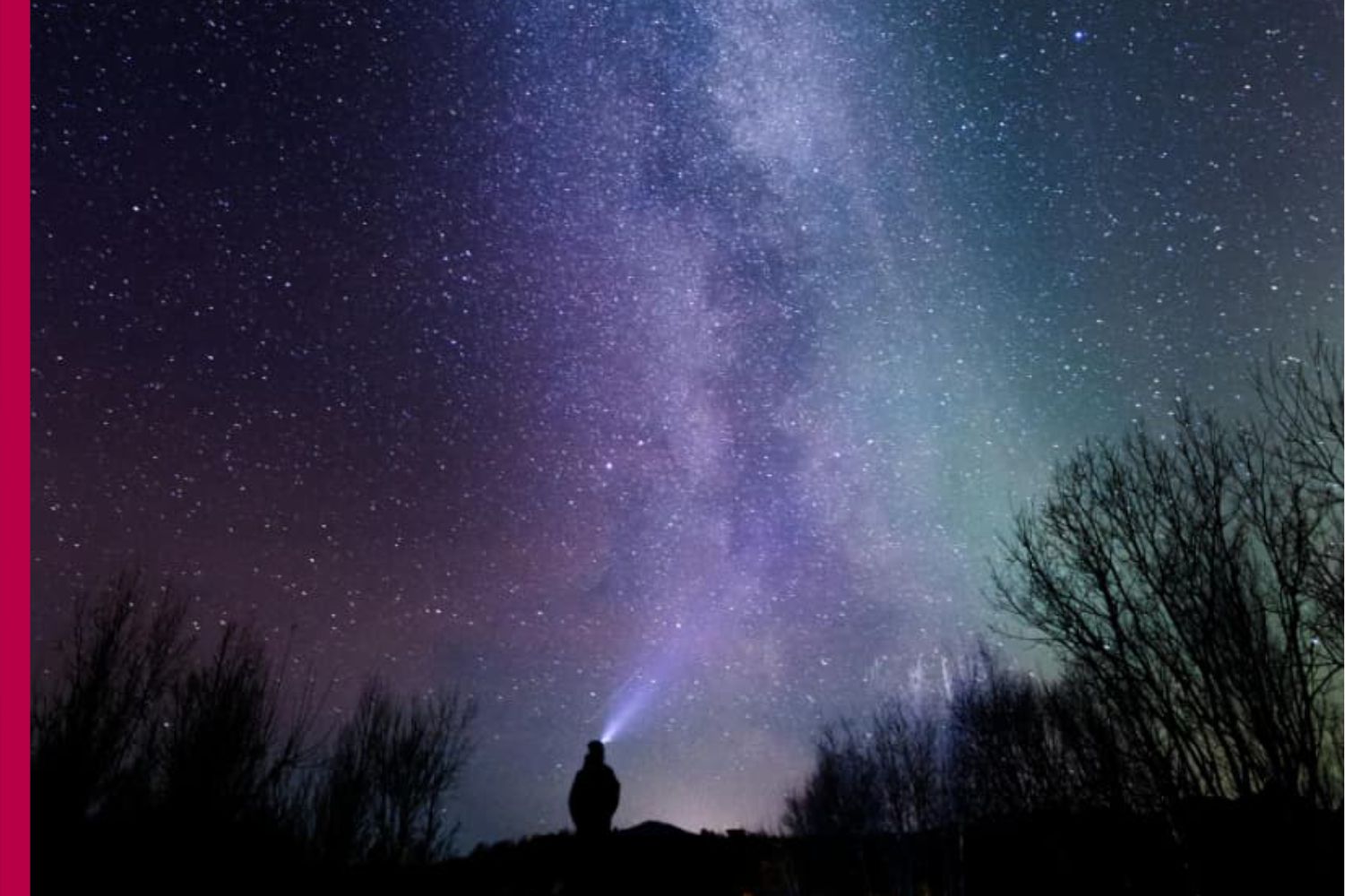
The North Pole Star, commonly known as Polaris, holds a special place in the night sky and in human history. Unlike most stars that appear to rise and set as the Earth rotates, Polaris seems almost motionless. This unique characteristic occurs because the star is located nearly directly above Earth’s North Pole. As a result, it remains fixed in the northern sky while other stars circle around it, making it a reliable celestial reference point.
For centuries, Polaris has been an essential tool for navigation. Long before the invention of compasses, GPS, and modern maps, sailors, travelers, and explorers depended on the stars to find their way. By locating the North Pole Star, they could determine the direction of north with remarkable accuracy. This simple yet powerful method helped guide ships across vast oceans, traders across deserts, and explorers into unknown lands. Polaris became a symbol of safety and direction, especially during long and dangerous journeys.
In addition to showing direction, the North Pole Star also helps determine latitude. The angle of Polaris above the horizon roughly matches the observer’s latitude in the Northern Hemisphere. This allowed navigators to estimate how far north or south they were traveling. For example, someone standing at the North Pole would see Polaris almost directly overhead, while someone closer to the equator would see it lower in the sky. This practical use made Polaris invaluable for early explorers and mapmakers.

From a scientific perspective, Polaris is not a single star but a multiple-star system, with the main star being a supergiant much larger and brighter than the Sun. Although it appears modest to the naked eye, Polaris is actually thousands of times more luminous than our Sun. Its steady glow and position have made it one of the most studied stars in astronomy, helping scientists better understand stellar behavior and evolution.
Beyond science and navigation, the North Pole Star has deep cultural and symbolic meaning. In many traditions, it represents guidance, constancy, and hope. Writers, poets, and philosophers have often used Polaris as a metaphor for finding one’s path in life or staying true to a fixed purpose despite changing circumstances. Its unchanging position in the sky has inspired generations to see it as a symbol of reliability and direction.
Even in the modern world, where advanced technology dominates navigation, the North Pole Star continues to hold importance. It is still taught in basic astronomy and outdoor survival skills, reminding us of humanity’s ancient connection with the sky. For stargazers and students, finding Polaris is often the first step in learning to understand the night sky.
In conclusion, the North Pole Star is far more than just a point of light above us. It is a guiding force that has shaped exploration, supported scientific discovery, and inspired human imagination for centuries. Polaris stands as a powerful reminder that the universe has always played a role in guiding humanity, offering direction not only across the Earth, but also through history itself.