





Atlantis is one of the most fascinating and enduring legends in human history. Described as a powerful and advanced civilization that vanished beneath the sea, Atlantis has captured the imagination of philosophers, historians, and dreamers for centuries. Though its existence remains unproven, the story of Atlantis continues to inspire curiosity, speculation, and creative exploration across cultures.
The earliest known reference to Atlantis comes from the ancient Greek philosopher Plato, who described it in his dialogues Timaeus and Critias. According to Plato, Atlantis was a technologically advanced island nation located beyond the Pillars of Hercules, believed to be near the Strait of Gibraltar. The civilization was said to possess remarkable wealth, architectural beauty, and military power. However, as its people became greedy and morally corrupt, the gods punished Atlantis, causing it to sink into the ocean in a single catastrophic event.
Plato’s account portrays Atlantis as a society that had achieved a high level of knowledge and organization. The city was described as having concentric rings of land and water, sophisticated engineering, and abundant natural resources. This image of a utopian yet flawed civilization has fueled debates about whether Atlantis was based on a real place or created as a philosophical metaphor. Some scholars believe Plato used Atlantis as a moral lesson about the dangers of arrogance and the decline of virtue.
Over the centuries, numerous theories have emerged about the possible location of Atlantis. Some researchers have linked it to ancient civilizations such as the Minoans of Crete, whose society declined after a massive volcanic eruption. Others have speculated locations ranging from the Mediterranean Sea to the Atlantic Ocean, Antarctica, and even the Caribbean. Despite extensive exploration and technological advances, no concrete evidence has been found to confirm Atlantis as a historical reality.
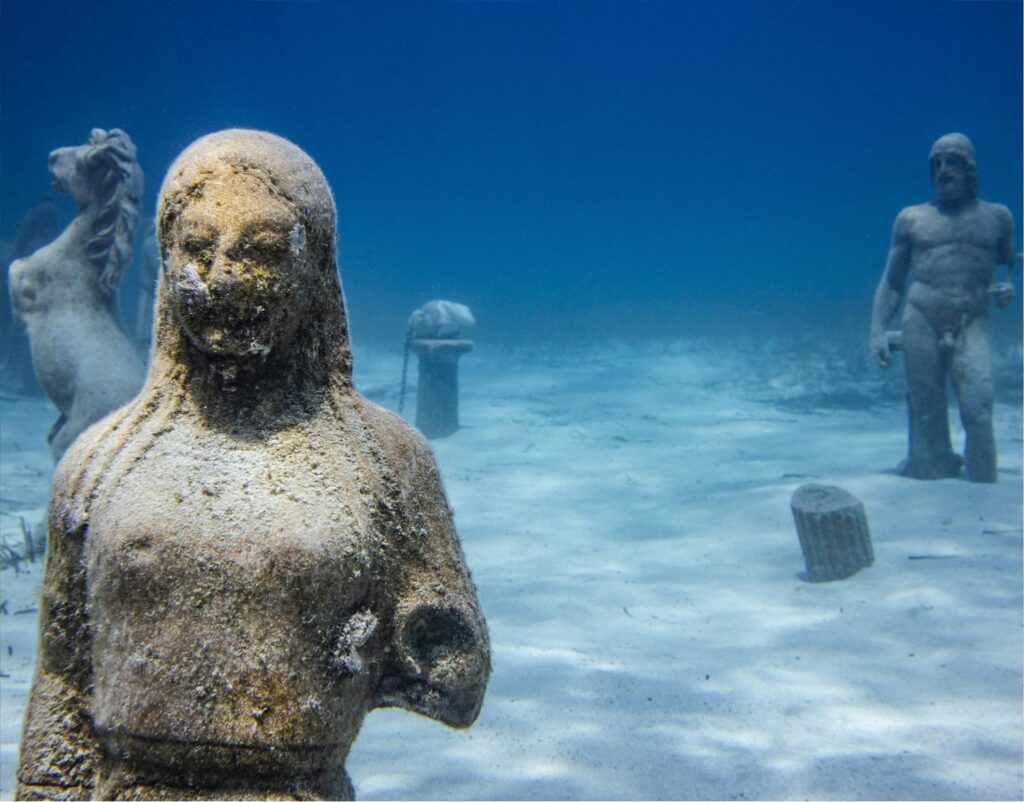
The legend of Atlantis has had a significant impact on literature, art, and popular culture. Writers and filmmakers have reimagined the lost city as a symbol of advanced technology, ancient wisdom, or hidden knowledge. Atlantis often appears in stories as a highly evolved civilization with futuristic technology, blending myth with science fiction. These interpretations reflect humanity’s fascination with lost knowledge and forgotten worlds.
Atlantis also represents a deeper human longing to understand the past and its mysteries. The idea of a lost civilization challenges assumptions about ancient societies and encourages exploration of history, archaeology, and mythology. It raises questions about how civilizations rise and fall and what lessons can be learned from their decline.
In modern discussions, Atlantis is sometimes associated with themes of environmental disaster and climate change. The sudden sinking of a powerful civilization serves as a cautionary tale about ignoring natural forces and moral responsibility. This perspective gives the legend contemporary relevance, connecting ancient myth to modern concerns.
In conclusion, Atlantis remains a powerful symbol of mystery, ambition, and loss. Whether it was a real place or a philosophical invention, its story continues to resonate with people around the world. Atlantis endures not because it has been found, but because it invites imagination, reflection, and a timeless search for hidden truths beneath the surface of history.