



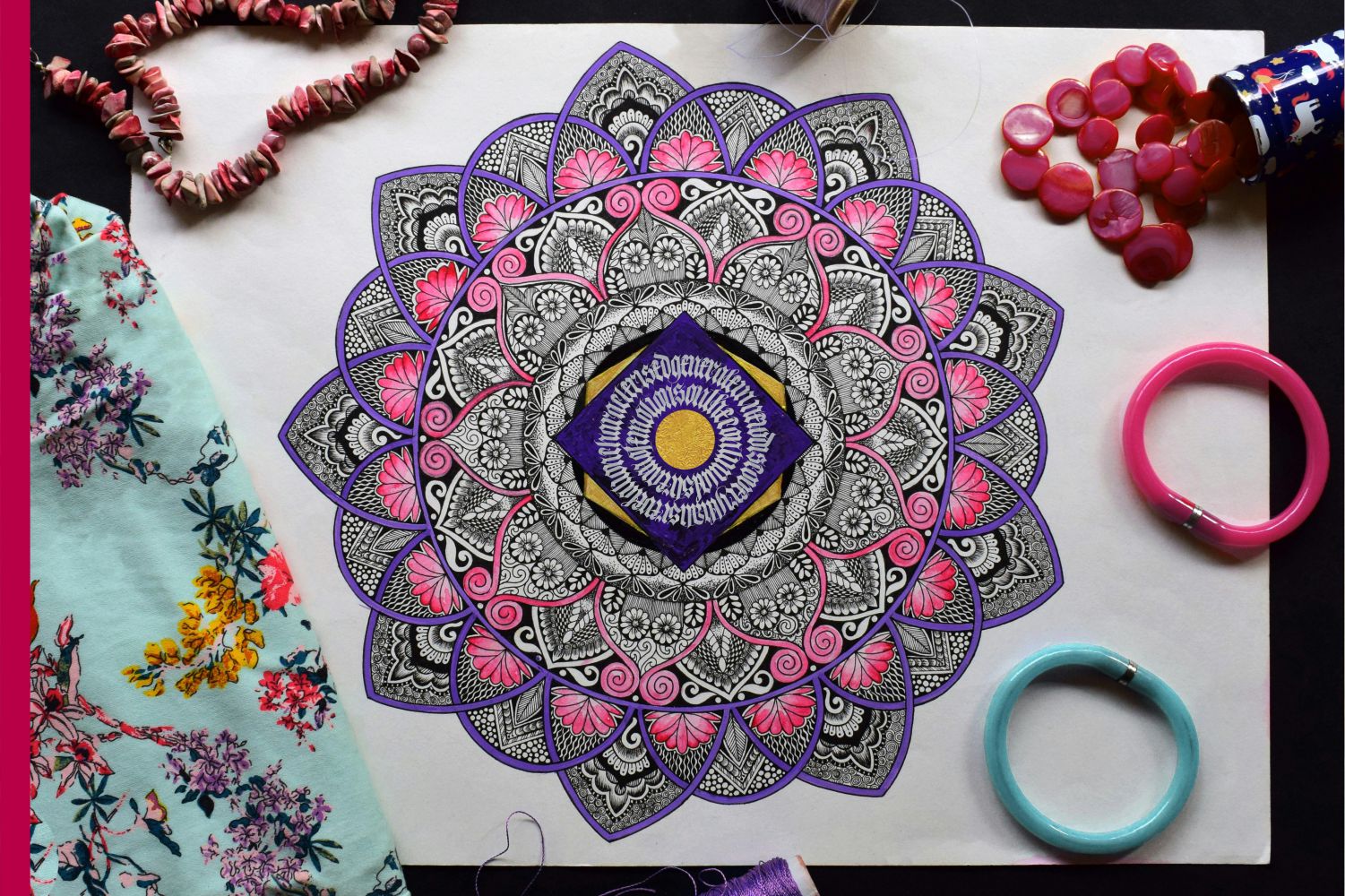
Mandala art is a timeless form of creative expression that combines geometry, symbolism, and spirituality. The word “mandala” comes from the ancient Sanskrit language and means “circle” or “center.” Traditionally used in Hindu and Buddhist cultures, mandalas represent the universe, balance, and the connection between the inner self and the outer world. Over time, mandala art has evolved beyond its spiritual roots and is now widely appreciated as a powerful artistic and therapeutic practice.
One of the most distinctive features of mandala art is its circular structure. Designs usually begin at a central point and expand outward in symmetrical patterns. This sense of order and repetition creates harmony and visual balance. The circular form symbolizes wholeness, unity, and continuity, making mandalas deeply meaningful as well as visually captivating. Each layer and shape within a mandala often holds symbolic value, representing elements such as life, energy, or transformation.
Mandala art is known for its calming and meditative qualities. Creating or coloring mandalas helps individuals focus their attention, slow down their thoughts, and enter a state of mindfulness. This is why mandala art is commonly used in art therapy and stress-relief practices. The repetitive patterns encourage patience and concentration, allowing the artist to disconnect from distractions and reconnect with their inner self. For many, the process is just as important as the final artwork.
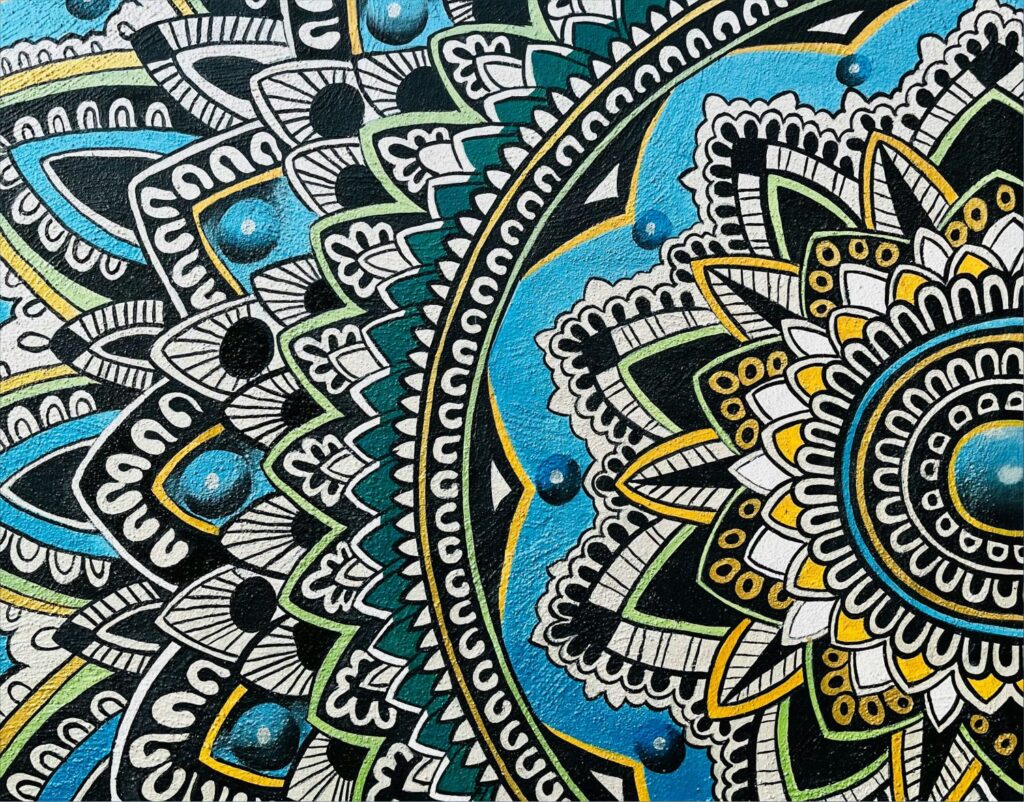
Color plays a significant role in mandala art. Different colors carry different meanings and emotional effects. Warm colors like red, orange, and yellow often represent energy, passion, and positivity, while cool colors such as blue and green evoke calmness, healing, and balance. Artists choose colors based on personal emotions, intentions, or cultural symbolism, making each mandala a unique reflection of the creator’s state of mind.
In modern times, mandala art has found its place in various creative fields. It is used in graphic design, fashion, interior décor, tattoos, and digital art. Mandala patterns add depth, elegance, and a sense of spirituality to contemporary designs. Their versatility allows them to blend traditional symbolism with modern aesthetics, appealing to a wide range of audiences across cultures.
Mandala art is also highly accessible, making it popular among beginners and experienced artists alike. Anyone can start creating mandalas using simple tools like paper, pens, pencils, or digital software. There are no strict rules, allowing complete freedom of expression. This inclusivity encourages people of all ages to explore their creativity without fear of perfection.
In conclusion, mandala art is more than just decorative design—it is a meaningful and mindful art form that connects creativity with inner balance. Through its patterns, colors, and symbolism, mandala art invites both the artist and the viewer into a peaceful space of reflection and harmony. Whether practiced for spiritual growth, relaxation, or artistic expression, mandala art continues to inspire and heal across generations.